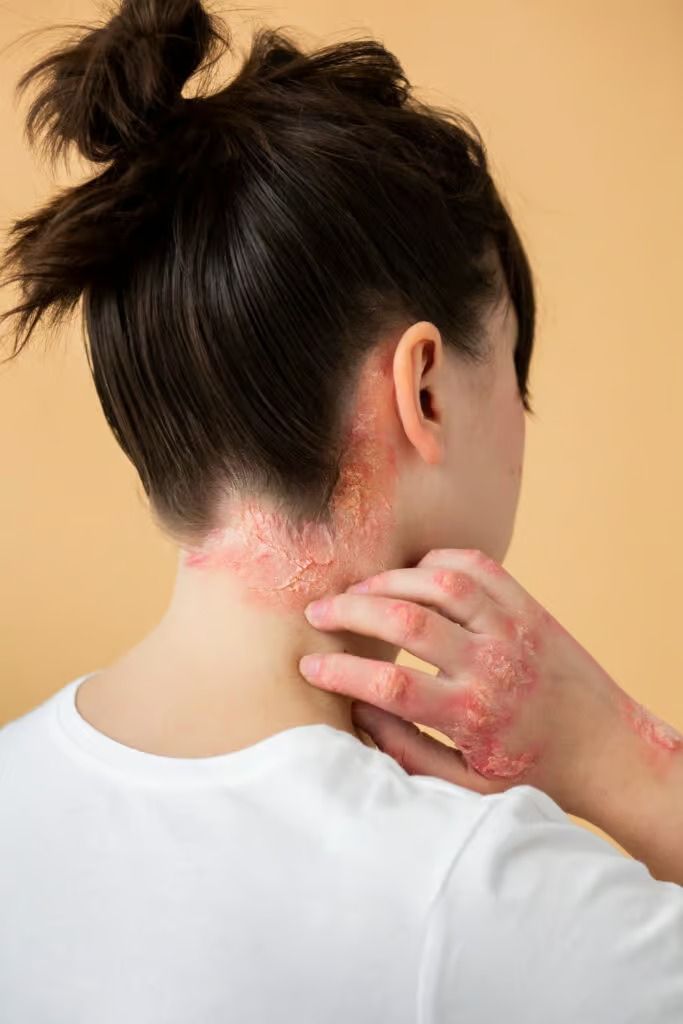
NAET and Skin Conditions: How Allergies and Sensitivities May Be the Root Cause of Your Skin Problems
The skin is the body's largest organ, and for millions of people it is also the most visible site of chronic suffering. Eczema, psoriasis, hives, rosacea, acne, and chronic rashes are conditions that not only cause physical discomfort but deeply affect confidence and quality of life. While topical treatments and medications can offer temporary relief, they rarely address why the skin keeps reacting in the first place. Increasingly, integrative practitioners are recognizing that allergies and sensitivities — many of them undetected — are among the most significant and most overlooked drivers of chronic skin conditions. NAET (Nambudripad's Allergy Elimination Technique) offers a holistic approach to identifying and clearing these triggers, giving the skin the opportunity to heal from within.
The Skin as a Mirror of Internal Immune Health
In integrative medicine, the skin is often described as a mirror of what is happening internally. When the body's immune system is under chronic stress — constantly reacting to foods, environmental substances, or chemical exposures — the skin frequently becomes the site where that internal inflammation surfaces. Redness, itching, flaking, pustules, and swelling are not random events. They are the visible expression of an immune system that is overwhelmed, reactive, and struggling to maintain balance.
The connection between the gut, the immune system, and the skin — sometimes referred to as the gut-skin axis — is well established. A disrupted gut lining allows inflammatory particles to enter the bloodstream, the immune system responds with widespread inflammatory signaling, and the skin bears the consequences. This is why so many people with chronic skin conditions also experience digestive complaints, fatigue, or joint pain — because the root immune imbalance affects multiple systems simultaneously.
How Allergies and Sensitivities Manifest in the Skin
When the body encounters an allergen or a substance it is sensitive to, it triggers an immune response that releases inflammatory chemicals including histamine, cytokines, and immunoglobulins. In the skin, this translates directly into itching, redness, swelling, and barrier disruption. For individuals with chronic skin conditions, this is not an occasional event — it is a near-constant state driven by repeated, often daily, exposure to unidentified triggers.
What makes this particularly challenging is that skin reactions do not always appear immediately after exposure. Delayed sensitivity reactions can occur hours or even days after contact with a trigger, making it extremely difficult to connect the dots between a specific food, substance, or environment and the resulting flare. This is where NAET's approach to comprehensive sensitivity testing becomes especially valuable — it looks beyond the obvious and immediate reactions to uncover the subtler, slower-acting sensitivities that conventional allergy testing often misses.
Common Allergens and Sensitivities Linked to Skin Conditions
In NAET practice, skin conditions are evaluated through a broad lens that considers foods, environmental exposures, nutritional sensitivities, and chemical reactions:
Foods: Sugar is one of the most pervasive dietary triggers for inflammatory skin conditions, feeding internal inflammation and disrupting the skin's hormonal balance. Gluten and dairy are closely associated with eczema and psoriasis flares. Eggs, corn, soy, shellfish, tree nuts, and food additives such as artificial colors, preservatives, and flavor enhancers are also frequently identified. Yeast and fermented foods can be problematic for individuals prone to fungal-related skin issues or candida overgrowth, which commonly presents in the skin.
Environmental Allergens: Pollens, dust mites, mold spores, and animal dander are well-known triggers for allergic skin reactions including hives and eczema. Seasonal changes often correspond with skin flares precisely because environmental allergen loads shift dramatically. Latex, nickel, and other contact allergens are also evaluated for their role in localized and systemic skin reactions.
Chemical and Synthetic Sensitivities: Fragrances, preservatives in personal care products, laundry detergents, cleaning agents, pesticide residues, and synthetic fabrics are common but frequently unrecognized contributors to chronic skin conditions. Individuals with sensitive skin or conditions like rosacea and contact dermatitis are often reacting to a complex web of chemical exposures rather than a single identifiable cause.
Nutritional Sensitivities: Vitamin A plays a foundational role in skin cell turnover and barrier function — sensitivity to it can impair the skin's ability to renew and protect itself. Zinc is essential for wound healing and inflammation regulation, and sensitivity to it is frequently observed in individuals with acne and slow-healing skin. Vitamin C, essential fatty acids, and B vitamins are also important, as sensitivities to these nutrients compromise the skin's structural integrity and immune resilience.
Hormonal Sensitivities: This is an often-overlooked dimension of skin health. Sensitivities to the body's own hormones — including estrogen, progesterone, and cortisol — can trigger cyclical skin flares that track with the menstrual cycle or stress response. Women who notice their eczema, acne, or hives worsen at specific points in their cycle may be experiencing hormonal sensitivity reactions that conventional testing does not evaluate.
How NAET Approaches Skin Conditions
NAET uses muscle response testing to systematically identify which substances the immune system is reacting to, spanning foods, environmental allergens, chemicals, nutrients, and hormones. Once a sensitivity is identified, a gentle acupressure treatment is administered along the spinal energy pathways while the patient holds the allergen — with the goal of reprogramming the nervous system so it no longer mounts an inflammatory response to that substance.
For skin conditions, NAET practitioners typically begin with foundational clearings — basic nutrients, sugars, proteins, and grains — before moving into more targeted sensitivities relevant to the individual's specific skin presentation. As the body's allergic burden is reduced layer by layer, the immune system becomes less reactive, internal inflammation decreases, and the skin is given the conditions it needs to repair its barrier, reduce reactivity, and stabilize.
Many patients with chronic skin conditions report gradual but meaningful improvements in itching, redness, and flare frequency as their sensitivities are cleared — along with improvements in digestion and energy that reflect the broader systemic shift taking place.
Skin Conditions That May Benefit
NAET may be especially worth exploring for individuals living with eczema and atopic dermatitis, psoriasis, chronic hives and urticaria, rosacea, acne — particularly cystic or hormonally driven acne, contact dermatitis, seborrheic dermatitis, and unexplained rashes or itching that have not responded fully to conventional treatment. It is also highly relevant for those whose skin symptoms fluctuate with diet, seasons, stress, or hormonal cycles — patterns that strongly suggest an underlying allergic or sensitivity component.
Giving Your Skin a Chance to Heal
Chronic skin conditions are rarely just a skin problem. They are a signal from the immune system that something in the body's internal environment is out of balance. Creams and medications can quiet that signal temporarily, but they cannot resolve the underlying reactivity that keeps generating it. NAET works differently — by identifying and clearing the specific allergic and sensitivity triggers that are keeping the immune system in a state of chronic activation, it addresses the root cause rather than the surface expression.
When the body is no longer spending its resources reacting to everyday foods, environmental exposures, and essential nutrients, it can redirect that energy toward repair, regeneration, and the restoration of healthy, resilient skin